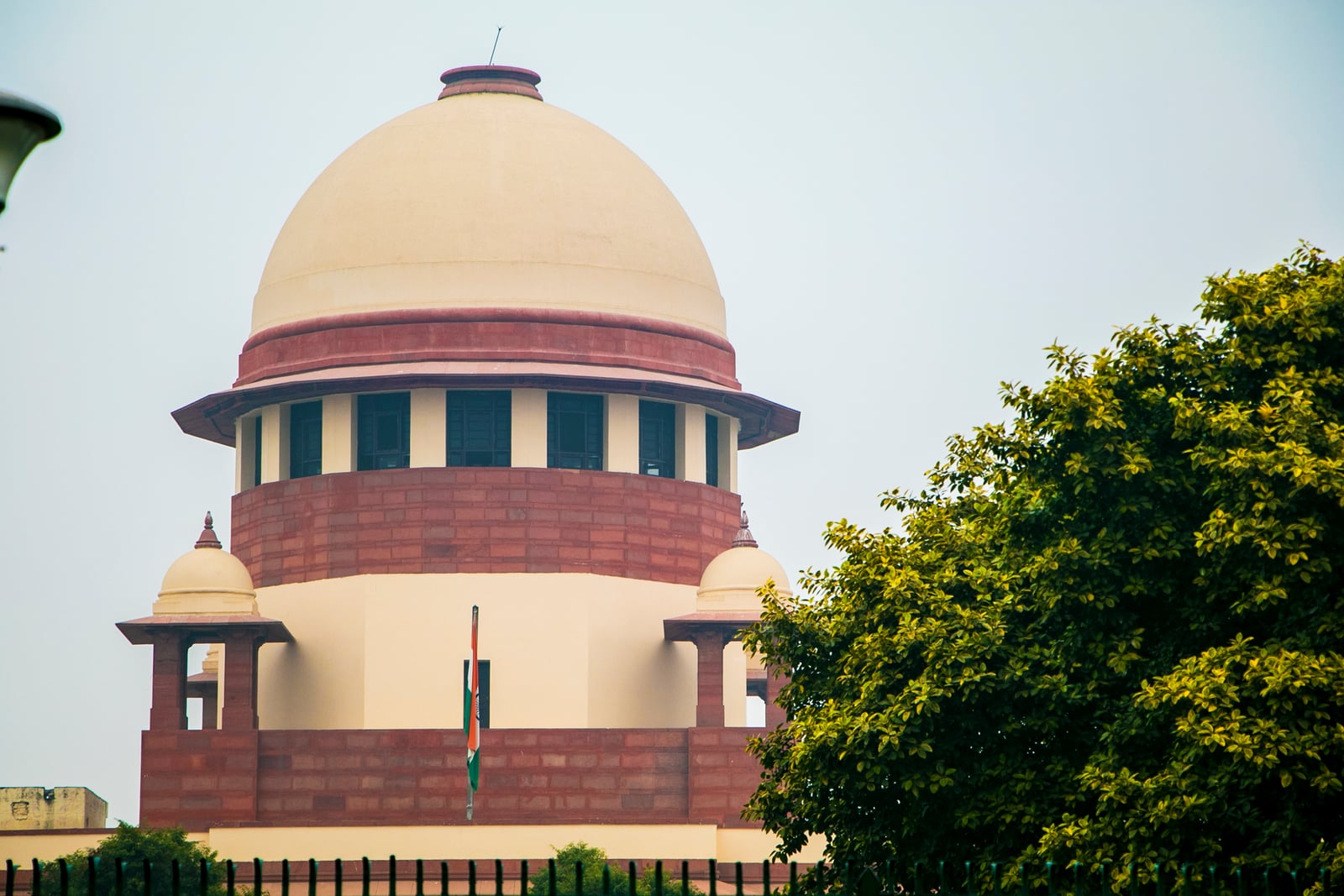
Matters reaching the Supreme Court of India typically arrive after prolonged proceedings before trial courts, tribunals or High Courts. Engaging a Supreme Court advocate in India at the right stage helps clients understand jurisdictional requirements, procedural timelines, and the evidentiary record the apex court will examine.
Eagle Law & Integrity (ELI) advises clients on matters before the Supreme Court, including appeals, special leave petitions and constitutional proceedings, working alongside clients to assess the merits and procedural posture of each case.
The Supreme Court functions as the final constitutional court under Part V, Chapter IV of the Constitution of India. Its jurisdiction is broadly categorised as follows:
Article 131
Disputes between the Union and States, or between two or more States, involving legal rights. The Supreme Court has the authority to hear such disputes directly, without the matter first being decided by a lower court.
Articles 132–134A
Civil appeals and criminal appeals from High Court judgments, mostly on a certificate from the High Court that the case involves a substantial question of law. A criminal appeal lies as of right only in narrow cases – for example, where the High Court reverses an acquittal and sentences the accused to death (Article 134(1)).
By Statute
Appeals that an Act allows directly to the Supreme Court – for example, from the National Consumer Disputes Redressal Commission (Section 67, Consumer Protection Act, 2019), from the NCLAT (Section 423, Companies Act, 2013), and against a High Court order punishing for contempt (Section 19, Contempt of Courts Act, 1971).
Article 136
Discretionary power to grant leave to appeal from any judgment, decree or order passed by any court or tribunal in India. The power may be exercised in exceptional cases where the Supreme Court considers that an appeal should be heard.
Article 32
Power to issue writs for the enforcement of fundamental rights. The Supreme Court may issue appropriate directions, orders or writs, including habeas corpus, mandamus, prohibition, quo warranto and certiorari.
Article 143
Power to provide opinions on questions of law or fact referred to it by the President. The reference may concern questions of public importance or matters arising from pre-Constitution treaties, agreements or similar instruments.
Each category carries distinct procedural requirements, limitation periods and thresholds that a Supreme Court lawyer must assess before advising a client on whether to approach the Court.
While each matter is fact-specific, the broad procedural steps generally involve:
Review of the impugned judgment or order, the lower court or tribunal record, and the grounds available in law.
Preparation of the petition, appeal memo, or writ petition, along with supporting documents, annexures and affidavits in the prescribed format under the Supreme Court Rules, 2013.
Filing through an Advocate-on-Record before the Registry, which checks the papers for limitation, court fees and procedural compliance.
At the first hearing, the Bench decides whether to issue notice to the other side, grant interim relief, or dismiss the petition at that stage. Urgent matters may be mentioned for early listing.
Arguments before the Bench, which may involve preliminary hearing on admission, followed by final hearing if leave is granted or the matter is admitted.
Filing of applications for stay, interim relief or exemption, as required during the pendency of the main matter.
Judgment, order or disposal of the matter, which may be followed by review or curative petitions in limited circumstances.
Timelines at each stage vary depending on the nature of the case, the Bench’s roster, and the volume of pending matters before the Court.
Eagle Law & Integrity assists clients in preparing case papers, coordinates with Advocates-on-Record where required, and advises on the procedural and substantive aspects of proceedings before the Supreme Court, customised to the specific facts and objectives of every matter. For clients in Mumbai and elsewhere in Maharashtra, ELI prepares the matter here and works with an Advocate-on-Record in New Delhi for filing.
Navigating the Supreme Court of India demands careful strategic assessment. If you are considering an appeal, special leave petition, or need advice on constitutional proceedings, our team at Eagle Law & Integrity can evaluate your matter’s merits and procedural requirements.
Book a ConsultationAn appeal under Articles 132 to 134A generally needs a certificate from the High Court (only a few criminal appeals lie as of right), and some Acts provide a direct statutory appeal. Where there is no certificate and no statutory appeal, the route is a special leave petition under Article 136. The Supreme Court may grant or refuse leave at its discretion, and most petitions are decided at that first stage.
Yes. Unless you appear in person, every filing must be made through an Advocate-on-Record, and other advocates argue on the Advocate-on-Record’s instructions (Order IV, Supreme Court Rules, 2013).
A special leave petition must be filed within 90 days of the High Court’s judgment, or within 60 days of the date on which the High Court refused a certificate to appeal (Orders XXI and XXII, Supreme Court Rules, 2013, read with the Limitation Act, 1963). The time taken to obtain a certified copy of the judgment is excluded. A petition filed late must be accompanied by an application for condonation of delay explaining the delay.
A review petition must be filed within 30 days of the judgment and is usually decided by the same judges without an oral hearing (Order XLVII, Supreme Court Rules, 2013). If review is dismissed, a curative petition may be filed in exceptional cases, such as a breach of natural justice. It must be certified by a Senior Advocate (Rupa Ashok Hurra v. Ashok Hurra, (2002) 4 SCC 388; Order XLVIII).
No. Under Article 136, the Court exercises discretion in deciding whether to grant leave, and not every petition gets admitted or gets a full hearing on the merits.
Yes. You can file a transfer petition in the Supreme Court under Section 25 of the Code of Civil Procedure. The Court considers factors such as the convenience of the parties, the distance involved, who is looking after the children, and the parties’ means, and it has often transferred cases to the court where the wife lives. While the petition is pending, the Court may stay the proceedings in the other court. See our Divorce Law page.
Important Notice
The information on this page is general legal information and is not legal advice or a legal opinion. Every matter depends on its own facts and the applicable law. Reading this page, or contacting Eagle Law & Integrity through this website, does not create a lawyer–client relationship. No particular outcome is guaranteed. Please take legal advice on your specific situation before acting on anything on this page.
References